I Velvet Underground e la banana The Velvet Underground and the banana
500 copie vendute all'uscita. Milioni di band nate dopo. La storia dell'album rock più influente di sempre. 500 copies sold on release. Millions of bands born after. The story of the most influential rock album ever made.
New York, 1966. Mentre San Francisco si preparava all'estate dell'amore — fiori nei capelli, pace e luce, il sogno che sarebbe durato dodici mesi prima di frantumarsi su se stesso — al 231 di East 47th Street succedeva qualcosa di completamente diverso.
Lou Reed wrote about what he saw. Not what he imagined, not what he wanted to say — what was in front of him every day in lower Manhattan: addiction, desire, the particular loneliness of people who had deliberately placed themselves outside ordinary life.
Andy Warhol aveva affittato un magazzino industriale e lo aveva rivestito di carta stagnola argentata. Lo aveva chiamato The Factory: non per ironia, ma perché era davvero un luogo di produzione, un posto in cui si fabbricavano immagini, serigrafie, film sperimentali, performance e, alla fine, musica. Lou Reed aveva ventiquattro anni e scriveva canzoni su droghe, sadomasochismo, transessualità e morte non per provocare, ma perché erano le cose che aveva sotto gli occhi ogni giorno. John Cale veniva da una formazione di musica classica d'avanguardia con La Monte Young e portava nel gruppo un senso del timbro e del rumore che il rock non aveva mai incontrato.
That decision — to treat the subject matter of the street and the underground as legitimate lyrical territory, without editorial distance, without redemption arc — is where this record begins and where it has never been fully matched. John Cale brought something the rock format had no framework for: he had spent years in drone minimalism with La Monte Young and understood noise and sustain as compositional tools, not as failure. Nobody else sounded like this because nobody else had put these four people in a room.
La banana di WarholWarhol's banana
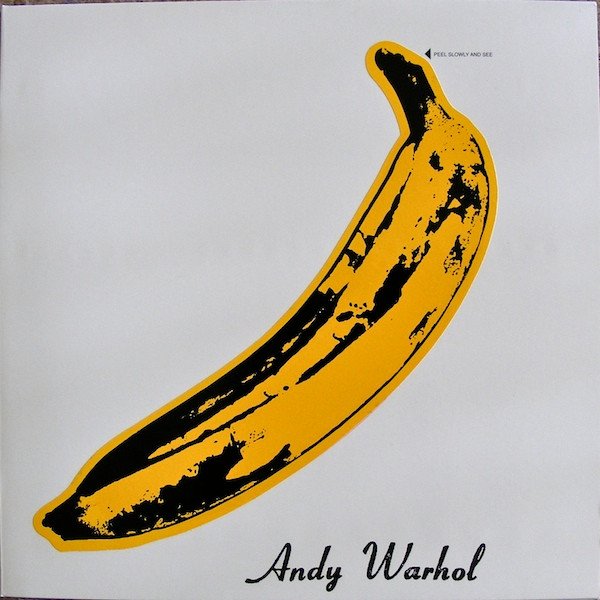
Warhol non si limitò a produrre il disco. Lo firmò come se fosse una sua opera, con il suo nome in copertina più grande di quello della band. La copertina era una banana gialla su fondo bianco. Le prime copie avevano un'etichetta adesiva con la scritta «Peel slowly and see»: sbucciandola, si scopriva una banana rosa. Le prime presse con la banana pelabile sono oggi tra i dischi più ricercati al mondo: copie Near Mint raggiungono i tremila euro su Discogs.
The cover is a banana. Warhol's name is bigger than the band's. The banana — yellow on white, peelable on early pressings to reveal a pink one beneath — is the Warhol move applied to records: the ordinary object elevated by context. First pressings with the intact peelable sticker are among the most sought-after records in the world: Near Mint copies clear three thousand euros on Discogs when they appear.
«Pela la banana.» — Andy Warhol aveva promesso che sarebbe stato divertente. «Peel slowly and see.» — Andy Warhol had promised it would be interesting.
Cosa c'era dentro il discoWhat was inside the record
Il disco si apre con Sunday Morning — e questa è già la prima sorpresa. Celesta, archi morbidi, la voce di Reed quasi sussurrata: un mattino dopo qualcosa che non si descrive. Heroin è il centro di gravità: otto minuti in cui il ritmo accelera e decelera come un respiro che cambia, la viola di Cale che porta il rumore fino alla soglia della tolleranza, Reed che canta senza giudizio su cosa significhi perdersi in una sostanza. Non è un inno alla droga — è una descrizione. Venus in Furs prende Sacher-Masoch e lo trasforma in un drone ipnotico di quattro minuti. All Tomorrow's Parties affida la voce a Nico — tedesca, bellissima, gelida come marmo — sopra un piano che suona come una campana funebre.
Sunday Morning is a misdirection. Celesta, gentle strings, Reed's voice barely audible — it sounds like the record is going to be gentle with you. It isn't. Heroin is where it goes furthest. Eight minutes. The tempo accelerates and slows like respiration changing under a substance — Cale's viola climbs into pure noise and pulls back, Reed sings without a position, without judgment, without the implicit reassurance that this is a cautionary tale. It is a description. All Tomorrow's Parties gives the vocal to Nico, and her German intonation over Tucker's martial pulse creates the most precise sound of inevitable melancholy that 1967 produced.
«Tutti quelli che hanno comprato uno dei cinquecento dischi hanno poi fondato una band.» «Everyone who bought one of those five hundred records went out and formed a band.» — Brian Eno, 1982
Perché non lo comprò nessunoWhy nobody bought it
The Velvet Underground & Nico uscì il 12 marzo 1967 per Verve Records. La MGM era nervosa: i testi di Reed parlavano esplicitamente di droghe e di sesso in modi che nessuna radio voleva trasmettere. Il disco entrò ed uscì dalle classifiche nel giro di settimane. Mentre Sgt. Pepper's dominava le classifiche mondiali, il primo album dei Velvet languiva in un magazzino. La band sarebbe rimasta in vita ancora qualche anno, perdendo prima Nico, poi Cale, poi Reed, fino a sciogliersi nel 1973 senza mai aver avuto un disco di successo commerciale.
The Velvet Underground & Nico was released March 12, 1967 on Verve Records. MGM was nervous: Reed's lyrics addressed drugs and sexuality in ways no AM radio would touch. The record entered and exited the charts in weeks. While Sgt. Pepper's dominated globally, the first Velvet Underground album sat in a warehouse. The band survived a few more years, losing first Nico, then Cale, then Reed, dissolving in 1973 without ever having a commercially successful record.
Le band che non sarebbero esistiteThe bands that wouldn't have existed
L'influenza dei Velvet Underground è uno di quei fenomeni che diventano più evidenti man mano che ci si allontana dal centro. Il punk rock del 1976 prende direttamente dalla loro idea di rock ridotto all'osso. Bowie, Joy Division, Patti Smith, Sonic Youth, R.E.M. — tutti ci hanno costruito sopra qualcosa.
The influence of the Velvet Underground is one of those phenomena that become more visible the further you get from the center. The punk rock of 1976 draws directly from their idea of rock stripped to the bone. Bowie, Joy Division, Patti Smith, Sonic Youth, R.E.M. — all built something on top of it.
Quale pressing cercareWhich pressing to find
Il pressing originale Verve (V6-5008, 1967, etichetta MGM verde) è la copia da collezionismo per eccellenza. Le copie con la banana pelabile intatta: tra i 600 e i 3.000 euro. Le copie con la banana già pelata si trovano tra i 60 e i 200 euro. La ristampa Sundazed su 180g del 2002 è il riferimento moderno più convincente: mastering curato, buona separazione stereo, pressing silenzioso — la scelta consigliata per l'ascolto quotidiano.
The original Verve (V6-5008, 1967, MGM green label): the collector's object. Intact peelable banana copies: six hundred to three thousand euros depending on condition and stamper. Banana-stripped copies land between sixty and two hundred euros. The 2002 Sundazed 180g is the modern reference: the mastering decision to leave Wilson's original balance intact while cleaning up surface noise is the correct one. For most purposes, the Sundazed is enough.
«C'è un paradosso al cuore della storia dei Velvet Underground: il disco che non vendette nulla è diventato uno dei dischi più citati, più studiati e più imitati del rock.» «The record is fifty-eight years old. It sounds like it was made recently. That is not coincidence or accident — it is method.» — Groov-illa
The Velvet Underground — The Velvet Underground & Nico
- PressingPressing
- Originale Verve V6-5008 (1967) · Consigliato: Sundazed 180g (2002)Original Verve V6-5008 (1967) · Recommended: Sundazed 180g (2002)
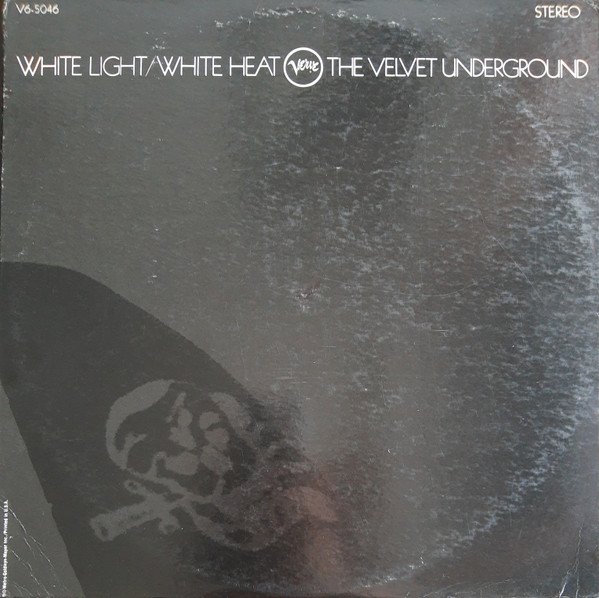
The Velvet Underground — White Light/White Heat
- PressingPressing
- Originale Verve V6-5046 (1968)Original Verve V6-5046 (1968)